From Awareness To Action
From Awareness to Action: What Healthcare Leaders, Employers, and Communities Can Do
by Cherise C. Irons
There is something special about June. It’s a time of transition when spring gives way to summer, and the days grow longer. Graduations, family vacations, and neighborhood festivals fill the calendar and communities come alive.
For me, June has always been one of my favorite months. It is my birthday month, Caribbean American Heritage Month, and Migraine and Headache Awareness Month a time when advocates, healthcare organizations, researchers, patients, caregivers, and communities unite to make an invisible disease more visible.But June has never been just celebration for me. It is also the month that reminds me how quickly life can change.
More than thirty years ago, I lost my father on Father's Day. That loss left a mark that still shows up quietly every year when the calendar turns. Years later, it was during the month of June that a negative interaction with a colleague became the catalyst for the migraine journey that would permanently change the course of my life.This year, June delivered another unexpected chapter I learned that I have a medical condition requiring surgery.
Here we are again, celebration and uncertainty in the same season. That is June. Yet despite the weight of it all, this was one of the most meaningful Junes I have experienced.
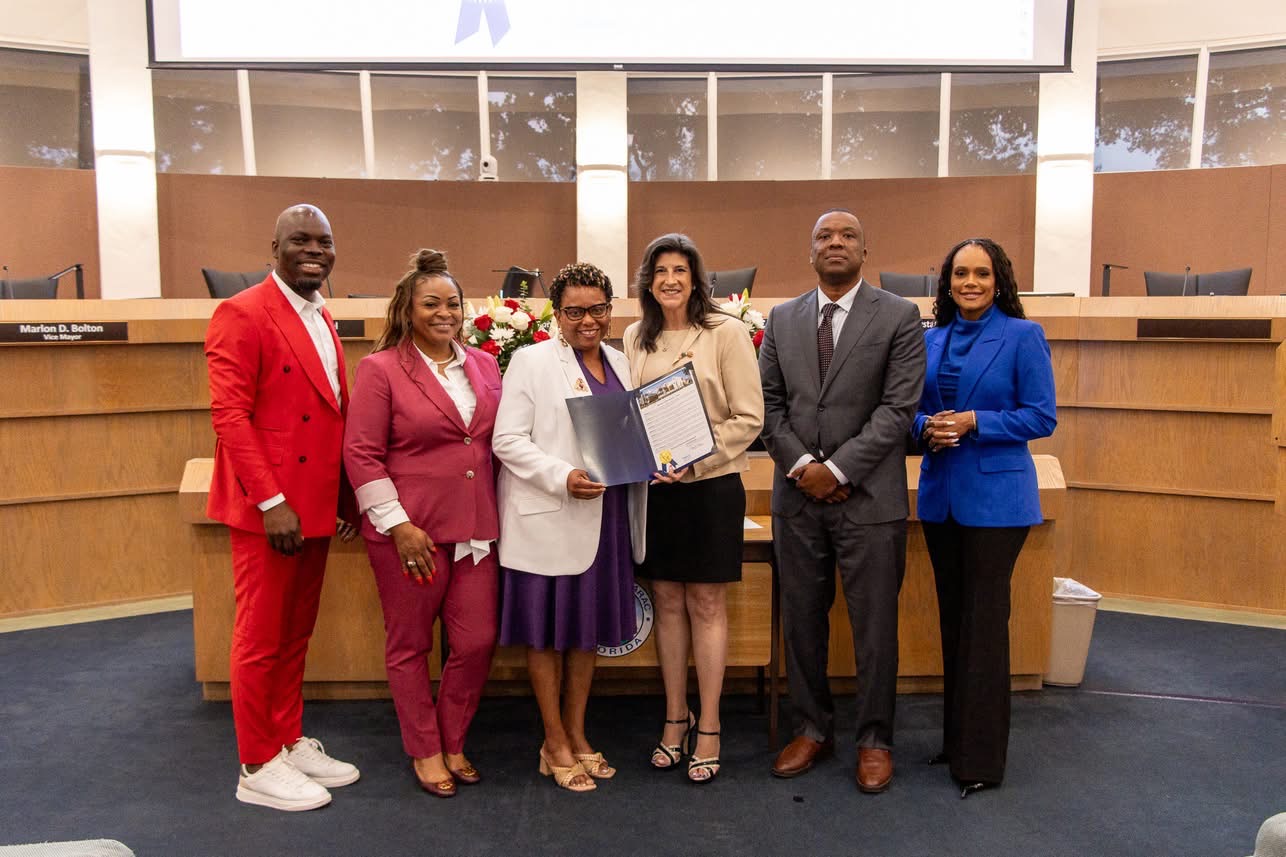
I celebrated another birthday with family and friends, attended inspiring events hosted by Jamaican Women of Florida and several local communities. I had the privilege of celebrating a dear friend's baby shower. I shared my story on the American Migraine Foundation's national platform and had the deep honor of accepting Migraine and Headache Awareness Month proclamations from the Cities of Tamarac, Lauderhill, and Coconut Creek.
Standing before each City Commission was a reminder that awareness, recognition and visibility matters.For every person living with migraine, hearing elected officials publicly acknowledge this disabling neurological disease sends a message that is more powerful than most people realize:
"We see you."
But as grateful as I was to receive each proclamation, one question stayed with me long after the applause faded.

What Happens After the Proclamation?
What happens after the photo is taken, the certificate is signed, and June ends? Do we simply repeat the process next year requesting proclamation from various cities and call it awareness? Or do we finally decide that awareness was never meant to be the destination? For those of us living with chronic migraine we must keep advocating.
Throughout this series, I have shared my personal journey of living with chronic migraine. I have explored the hidden costs that this disease places on individuals, families, employers, and healthcare systems. I have examined how communication or the lack of it shapes trust and healthcare outcomes for patients who are already carrying so much.
This final article asks the most important question of all:
What do we do now?
Awareness starts the conversation, action changes lives, a proclamation is a promise to walk in solidarity. It should never be viewed as a finish line instead an invitation for cities, healthcare organizations, employers, educators, and community leaders to ask a simple but powerful question: "How can we better support people living with migraine?"
Recognition without action changes very little and transforms communities.That is why I am encouraged by the introduction of the HEADACHE Act — the Headache Education, Access, Diagnosis, and Care Health Equity Act in Congress. This legislation recognizes that headache disorders deserve greater national attention through improved education, expanded research, better access to care, and coordinated public health efforts.The HEADACHE Act demonstrates something important: awareness, when paired with policy and commitment, becomes a force for real change. I believe our local communities can do the same.
What Action Can Look Like
·Imagine if every city that issued a proclamation also committed to one meaningful initiative each June.
·Imagine City Halls illuminated in purple throughout Migraine and Headache Awareness Month a visible signal to every resident that this community stands with the people living with this disease.
·Imagine public libraries creating educational displays about migraine and headache disorders meeting people where they already are.
·Imagine community walks that raise awareness while bringing together patients, caregivers, providers, and advocates in one shared space.
·Imagine employer wellness programs that address invisible disabilities with the same seriousness given to any other health condition offering flexible policies, reasonable accommodations, and a culture where employees do not have to hide their pain to keep their jobs.
·Imagine schools helping educators recognize how migraine affects student learning, attendance, and performance so that a child is never penalized for a disease they did not choose.
·Imagine hospitals hosting educational seminars, patient support groups, and community conversations that bring neurologists, primary care providers, patients, and caregivers together around the same table finally.
·Imagine faith communities recognizing those living with chronic illness and honoring the caregivers who quietly carry so much every single day.
These are not far-fetched ideas they are choices and every one of them is available to us right now.
Every Sector Has a Role
Meaningful change requires partners and there is room for everyone at the table. Healthcare leaders can strengthen patient communication, close the gaps that create distrust, and build cultures where empathy is not an afterthought but a standard of care. Patients living with migraine deserve providers who listen, to be believed, and systems that work for them and not against them.
Employers can stop treating migraine like a productivity problem and begin to see it as a serious neurological disease that affects real people who show up and give everything they have, even on their worst days. Flexible schedules, remote work options, and clear accommodation processes are not luxuries they are leadership.
Community organizations can host educational programs and wellness events that encourage connection rather than isolation because chronic illness is lonely, and community is medicine.
Schools can increase understanding among educators, staff, students, and families because a teacher who understands migraine can be the difference between a student who thrives and one who falls through the cracks.
Local governments can continue recognizing Migraine and Headache Awareness Month while creating frameworks for year-round engagement because the people living with this disease need more than a June resolution.
Advocates can keep sharing their stories because they are personal and allows the conversation to continue.
Patients can lend their voice to the conversations that shape how this disease is understood, funded, researched, and treated.
The truth is no single organization can do this alone but together, we can build communities where awareness becomes action.
Building Bridges
I have spent years as an educator, healthcare advocate, speaker, and advocate and one truth has stayed constant:
Meaningful change happens through connection and progress occurs when people who care about the same issue choose to work together across sectors, titles, andlived experiences.That belief is the foundation of everything I do through Irons Consulting Group to build bridges between patients, providers, and healthcare leaders, and communities because every bridge creates the possibility for greater understanding, greater collaboration, and ultimately, better outcomes for the people we serve.
My work has allowed me to speak on national platforms, win awards, and stand before city commissions to ask for recognition of migraine.I have done all this not because my story is exceptional but because it is familiar to millions of people who are still waiting for someone to speak up.This is why I keep going even when it is difficult.
My Hope for Next June
My hope for June 2027, is that we celebrate more than another proclamation. I want to celebrate new partnerships where hospitals have launched migraine education initiatives, employers have adopted more supportive workplace practices, communities have lit buildings purple, schools that educated families, healthcare teams that strengthened communication, rebuilt trust, and cities that transform recognition into measurable, documented action.That is the transition I am working toward not simply from spring to summer but from awareness to action.
A Call to Action
If you are a healthcare leader, ask yourself:
What change can my organization make before June 2027 to improve the experience of patients living with migraine?
If you are an employer:
How can my workplace better support employees who live with invisible disabilities?
If you are a community leader or elected official :
How will this proclamation inspire action beyond the month of June?
If you are someone living with migraine:
know that your story, voice, and advocacy are valid.
Every proclamation received by me and other advocates across the country symbolizes how important it is to share our stories and advocate for those living with migraine. Each one received is because someone was willing to ask for change and was answered with a yes. Let us ensure that next June is remembered not only for the proclamations we received but for the actions we took together. The truth is awareness starts the conversation and action changes lives.


